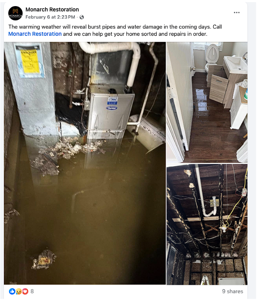
Spring brings warmer days, blooming trees, and a sense of relief. But for many homeowners, it also reveals hidden problems that went unnoticed all winter. That slow drip behind the walls, the damp carpet in the basement, or the faint musty smell you may have ignored can suddenly become more noticeable.
This guide is here to help you understand what to watch for, why early action matters, and how to protect your home before a small problem becomes a costly repair.
If you suspect water damage or just want peace of mind, call Monarch Restoration at (502) 401-1805.
Why Warming Weather Can Be the Moment You Find Out
As winter fades and temperatures begin to rise, many homeowners assume harsh weather is finally over. However, the spring thaw can actually reveal problems that were hidden all winter long.
Ice and snow may have protected cracks in your pipes or leaks, but once things warm up, water begins to move freely, and that is when issues like burst pipes or hidden water damage start.
Because of this, it is important to understand that warmer weather often acts as a revealing season for hidden damage. Problems that began during freezing temperatures may become visible now, as melting ice and rising moisture lead to dripping water or unusual stains.
Warning Signs to Look For Right Now
Inside the home:
Start with the areas you use the most. Check under sinks, behind appliances, and along walls for water stains, bubbling paint, or warped flooring. Sometimes the signs are hard to notice, but they can indicate that water has been quietly seeping in.
Keep in mind that even if you do not see puddles, persistent dampness can encourage mold growth, which creates health risks and structural issues. If you notice anything unusual, act quickly to prevent it from getting worse.
In the basement and utility areas:
Basements and utility rooms are especially vulnerable during spring. Melting snow and ice can saturate the ground around your foundation, which leads to seepage through walls or floors. Look for puddles near your water heater, sump pump, or laundry area, and check the condition of exposed pipes.
Pay special attention to older pipes because they may have been weakened by freezing temperatures and could be on the verge of bursting. Catching these problems early saves you from emergency repairs and water damage that can spread throughout your home.
Outside:
Finally, do not forget the exterior of your home. Inspect your roof, gutters, and downspouts for ice or water damage, and make sure that the grading around your foundation directs water away from the house.
Look for soggy spots in your yard or pooling water near your foundation, which can signal drainage problems. Spring is the perfect time to take these preventative steps because fixing small issues now can save major headaches later.
How Bad Can It Get If You Wait?
Even a slow leak can affect walls, floors, and ceilings before you realize it. Over time, moisture can weaken your home’s structure, warp wood, and ruin insulation, making repairs much more expensive than if you caught it early.
Apart from structural damage, standing water creates the perfect environment for mold and mildew to grow. Not only does this smell bad, but it can also pose serious health risks for your family. And if the leak is near electrical outlets or appliances, there is even a risk of fire or shock.
In short, what starts as a minor inconvenience can escalate quickly. That’s why taking action immediately is always the smartest choice.
What to Do the Moment You Suspect a Burst Pipe or Water Damage
First, shut off the main water supply to prevent further flooding. Even a small delay can allow water to spread into areas that are harder to reach and repair.
Next, assess the situation carefully but safely. Move valuables, electronics, and furniture away from the affected area to minimize damage. Take photos if possible, as these can help with insurance claims later.
While doing these initial steps, contact a professional restoration team. Experts can quickly identify the source of the leak, stop the damage from spreading, and begin the cleanup and repair process.
What Happens When Monarch Responds to a Burst Pipe Call
The moment you call Monarch Restoration about a burst pipe or water damage, our team moves quickly to assess the situation.
First, we identify the source of the leak and stop further water flow to prevent additional damage. From there, we evaluate the affected areas and determine the best approach to contain and repair the problem.
Our experts then begin the cleanup process, removing excess water and drying out your home thoroughly. This step is crucial because lingering moisture can lead to mold growth and structural issues.
Finally, we handle repairs and restoration to bring your home back to its pre-damage condition. We also guide you every step of the way so that you know exactly what is happening and what to expect.
Will My Insurance Cover This?
In most cases, standard homeowners’ insurance policies do include coverage for sudden and accidental water damage. However, coverage can vary depending on the source of the damage and whether preventive maintenance was neglected.
That is why it’s important to contact your insurance provider promptly and document the damage with photos before repairs begin. We provide detailed documentation of the damage and repairs, which can make the insurance claim process smoother and faster.
Frequently Asked Questions
How do I know if a pipe actually burst or if it’s something else?
A burst pipe usually shows up suddenly. You might notice water pooling in one area, like a wet ceiling directly below a bathroom, or standing water in the basement near a visible pipe, or a sudden drop in water pressure. A professional inspection with moisture meters will confirm the source and extent.
Can I dry it out myself with fans?
Consumer fans and dehumidifiers are not powerful enough to fully dry structural materials like wall framing, subfloors, and insulation. On the surface, the area may seem dry, but hidden moisture stays for weeks, giving mold the perfect environment to grow. Professionals use specialized equipment designed to dry both air and materials thoroughly.
What if I don’t see standing water — should I still call?
Yes. Many of the worst cases start with signs, like a stain on the ceiling or a soft spot on the floor. Thermal imaging and moisture detection tools can locate water inside walls or under floors without tearing anything open. Early detection not only prevents structural damage but also saves you money and stress.
How quickly can mold grow after water damage?
Mold can begin developing within 24 – 48 hours in wet materials, especially in areas with poor airflow, like inside walls or under floors. Acting quickly, ideally within the first day, makes a significant difference in limiting mold growth.
Monarch Restoration serves homeowners across Kentucky
No matter where you are in Kentucky, Monarch Restoration is ready to help when water damage strikes.
Call (502) 401-1805 today to schedule a professional inspection and get immediate help with water damage.
The post What the Spring Thaw Reveals: Burst Pipes, Hidden Water Damage, and What to Do Next appeared first on Monarch Restoration.